Many companies have impeccable dashboards for bottom-line results: revenue, margin, SLA, NPS, churn, completed OKRs. The problem is that almost all of these indicators are end-of-life metrics. They show what happened afterward. When the result is bad, the conversation starts late, usually already with pressure, emergency corrections, and burnout.
Measuring the path to results is the difference between managing by consequence and managing by cause. It’s what allows you to see the real work while it’s happening, identify deviations early, and correct course before the quarter turns into a wildfire.
1. Results are a late indicator, the path is an early indicator.
Results are outcome metrics. They answer: did we arrive or did we not arrive? But they don’t answer: why are we arriving this way, which points in the process are stalling, where is effort being wasted, which part of the system needs adjustment.
When a company only measures results, it tends to operate in reactive cycles:
• The indicator worsens
• Demands increase
• The volume of meetings grows
• The team loses focus
• Rework increases
• The indicator worsens even more
Measuring the path is not about creating bureaucracy, it’s about creating predictability. It means observing the workflow and the signals that precede the final performance.
2. The invisible cost of not measuring the path: work about work
Most of the performance loss is not in the main work, but in the work that exists to make the work happen.
Asana points out that, on average, 60% of work time is consumed by work about work, that is, coordination, information gathering, unnecessary meetings, and duplication, instead of qualified execution.
When this volume is not visible, the company interprets symptoms as if they were causes. The feeling becomes: lack of productivity. The real cause, often, is: lack of operational direction based on path data.
3. The Path Degrades When the Day is Fragmented
Even companies with defined processes can falter because the workday has become a mosaic of interruptions. And frequent interruptions are the enemy of consistent progress.
Microsoft describes that employees are interrupted every two minutes during core work hours by meetings, emails, or chats, reaching hundreds of interruptions per day in profiles with a high volume of “pings.”
This creates a predictable dynamic:
• Complex tasks take longer than expected
• Revisions accumulate near the deadline
• Decisions slip to the next week
• The “path” becomes a recurring urgency
The end result worsens, but the problem originated in the middle, in the real pace of work.
4. What does measuring the path mean in practice?
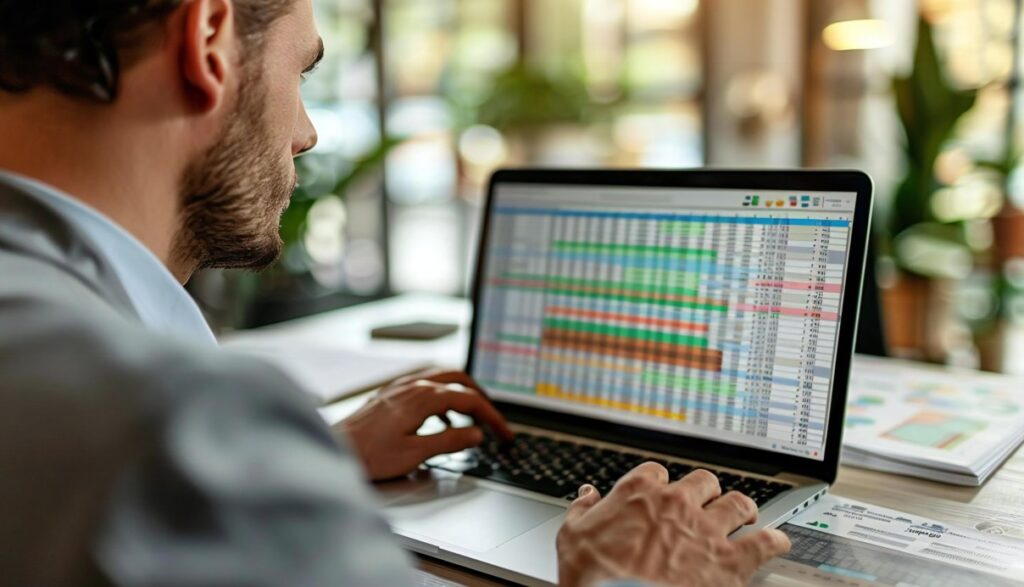
Measuring the path means transforming execution into actionable information. In practical terms, it involves observing:
• Execution cadence: does work flow or stall at recurring points?
• Bottlenecks: where tasks accumulate or dependencies cause delays?
• Rework: what frequently returns for review and why?
• Dispersion and over-coordination: when communication replaces execution?
• Load distribution: overload and underutilization within the team?
• Warning signs: patterns that precede delays, quality drops, or burnout?
These signs are operational “leading indicators”: they don’t replace results, but they explain and anticipate outcomes.
5. Why most companies don’t measure the path
Generally for three reasons:
• work is scattered across many tools and channels
• data relies on manual reports and status meetings
• data arrives late and in fragments, without continuity
In this scenario, the manager sees what has been delivered, but doesn’t see how the delivery is being built. Management becomes an exercise in perception, not evidence.
6. Productivity Radar as a solution: measuring the path with telemetry of real work
Productivity Radar solves exactly the gap between measuring the result and measuring the path.
The proposal is not to monitor people, but to make the system observable to guide better and faster decisions. Radar does this by transforming routine signals into continuous operational visibility.
In practice, Radar allows:
• mapping the real flow of activities and execution patterns
• identifying bottlenecks and points of blockage before they become delays
• highlighting where time is being consumed and where there is excessive coordination
• monitoring focus and engagement patterns to reduce dispersion and rework
• supporting data-driven decisions, reducing guesswork and micromanagement
When the company measures the path, it exchanges late correction for continuous adjustment. Results cease to be a surprise. Strategy ceases to be hope. The operation gains cadence.
Measuring results is necessary. Measuring the path to them is what makes the result repeatable.
Productivity Radar: The Future of Smart Management
What is Productivity Radar?
More than a management platform, Productivity Radar is the future of organizational efficiency. Using data intelligence, we track activities, processes, and employee engagement, providing leaders with a clear and strategic vision to drive real results.
Why does your company need Productivity Radar?
If your management still relies on assumptions and lacks visibility, it’s time for a change. Productivity Radar provides total clarity, helping you:
✅ Manage your human capital with precision
✅ Monitor processes and teams without micromanagement
✅ Identify behavioral patterns for more strategic decision-making
✅ Build a management system based on reliable data
The 4 Pillars of Smart Management
🔹 Strategic Human Capital Management – Optimize your team’s performance, from remote work to in-office setups
🔹 Intelligent Team Monitoring – Get an integrated view of what truly impacts your results
🔹 Data-Driven Indicators – Turn numbers into powerful insights
🔹 Unified Management – Schedules, telephony, and workflows all in one place
What does Productivity Radar make possible?
🚀 Management 4.0: Unify departments, visualize processes, and make data-driven decisions
📉 Reduce GAPs: Eliminate inefficiencies, repetitive processes, and operational risks
📊 Real-Time KPIs: Monitor performance with precision and optimize productivity
🔄 Continuous Improvement: Anticipate issues, optimize resources, and enhance corporate culture
How to Boost Productivity?
✅ Monitor and enhance team performance—remote, hybrid, or in-office
✅ Reduce waste and eliminate inefficiencies without excessive bureaucracy
✅ Prevent fraud and harmful behaviors before they impact your business
✅ Track behavioral trends for more assertive decision-making
🚀 Ready to transform your company’s management?
🔗 Request a demo now: www.radardeprodutividade.com.br