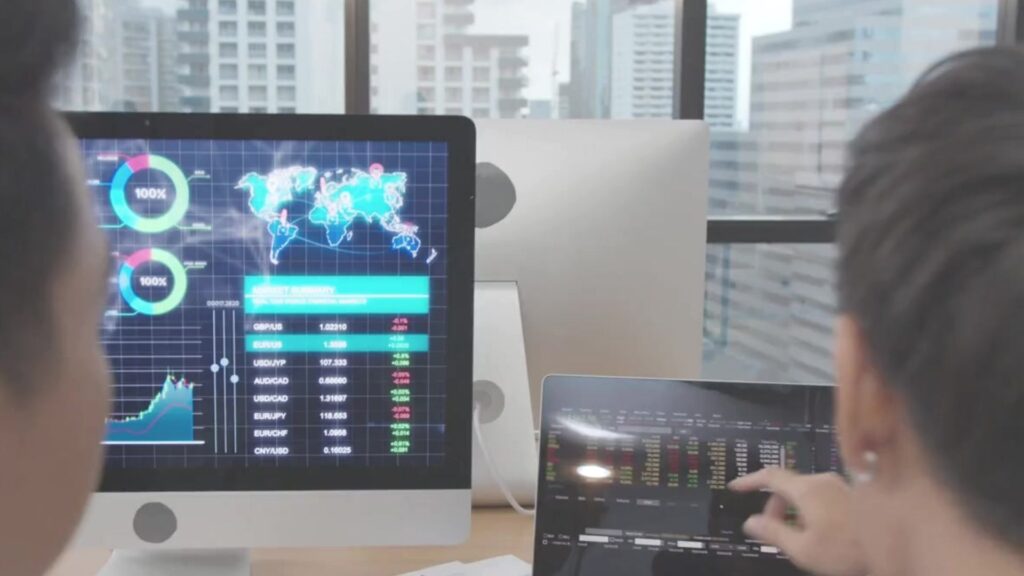

The day begins with a plan. But before the first meeting, problems arise that need solving—urgent requests and decisions that no one can make without consulting leadership.
By the end of the workday, the manager has been working intensely: resolving conflicts, responding to messages, and tracking deliverables.
But how much time did they spend developing their team, improving processes, or thinking about the future of the operation?
In many companies, leading is becoming a secondary activity within the very role of a leader.
The problem is that an organization sustained by managers who only address urgent issues may keep its operations running, but it will struggle to evolve.
1. When leading means “putting out fires”
The daily routine of many managers is dominated by tasks that require immediate responses.
Follow-up meetings, requests from various departments, operational issues, and ad-hoc decisions all compete for space on the calendar.
According to Gallup’s *State of the Global Workplace 2025* report, global manager engagement fell from 30% to 27% between 2023 and 2024.
The research also identified a two-percentage-point drop in global employee engagement, which stood at 21% in 2024.
While these results do not prove that operational urgencies are the direct cause of the decline in engagement, they do highlight the need to take a closer look at the working conditions of those in leadership roles.
A manager who is constantly consumed by day-to-day operations has less room to fulfill the strategic responsibilities of their position.
2. Excessive reliance on leadership can reveal structural problems
When every decision must go through the manager, the company creates a bottleneck.
The team waits for guidance.
Approvals pile up.
Priorities shift as new urgent matters arise.
And the leader becomes the primary point of dependency for the entire operation. The *State of Organizations 2023* report by McKinsey identifies organizational complexity as a significant challenge, highlighting bureaucratic structures, redundant activities, and inefficient decision-making mechanisms.
In such structures, leadership may end up compensating for process failures through individual effort.
The result is an organization that relies on the constant availability of specific individuals to keep functioning.
When every issue requires a manager’s intervention, the root problem may actually lie in how the work itself is organized.
3. The cost of leadership with no time to think
Leading requires tasks that rarely carry the same sense of urgency as operational problems.
Developing professionals, analyzing metrics, anticipating risks, and planning improvements are essential responsibilities—yet they are frequently deferred.
According to Microsoft’s *Work Trend Index 2025*, 52% of the leaders surveyed described their work as chaotic and fragmented.
Source: Microsoft: *Breaking Down the Infinite Workday*.
A fragmented schedule can hinder tasks that require deep concentration and continuity.
This creates a concerning cycle.
Without time to plan, recurring problems remain unresolved.
Without structural improvements, new urgent issues arise.
And the more urgent matters emerge, the less time a manager has to act proactively.
Leadership ends up managing the consequences of problems, while the root causes remain embedded in the operation.
4. How can leadership regain its strategic capacity?
Reducing the burden on managers does not simply mean decreasing their responsibilities.
It means providing the conditions for them to perform their roles more efficiently.
Several measures can help:
• Reviewing approval processes: identifying decisions that can be decentralized.
• Reducing redundant oversight: replacing repetitive controls with better-organized information.
• Establishing clear priorities: distinguishing between genuine emergencies and requests that can be planned for. • Strengthen team autonomy: empower professionals to resolve issues that fall within the scope of their responsibilities.
• Use operational indicators: understand activity patterns before making decisions.
The core objective is to reduce reliance on isolated perceptions and constant interventions.
The greater the clarity leadership has regarding operations, the better positioned they are to focus their attention on matters that truly require their involvement.
5. Productivity Radar: Greater operational intelligence, fewer decisions made in the dark
Many managers need to oversee teams without having a structured view of how the workday is actually being spent.
As a result, they often end up relying on frequent meetings, constant requests for status updates, and fragmented information.
Productivity Radar fosters a more data-driven management approach by aggregating indicators related to the use of corporate applications, meetings, and telephony—based on available integrations.
With this platform, your company can:
• Gain a better understanding of how the workday is distributed.
• Identify significant operational patterns.
• Analyze the role of meetings within daily activities.
• Investigate potential bottlenecks and signs of employee overload.
• Support decision-making regarding organizational structure and operational efficiency.
• Supplement managerial insight with objective metrics.
Productivity Radar does not replace leadership, nor does it automatically eliminate the need for ongoing oversight. Instead, it provides data that helps contextualize operations and guides more well-informed inquiries.
With greater visibility, managers can identify opportunities for improvement and refine practices that unnecessarily consume time.
Because a company needs leaders capable of solving problems.
But it needs, even more, leaders who are equipped to prevent those same problems from recurring.
Productivity Radar: Your operations, in data—without surveillance.
Schedule a demo and discover how to turn operational information into more strategic decisions.
Productivity Radar: The Future of Smart Management
What is Productivity Radar?
More than a management platform, Productivity Radar is the future of organizational efficiency. Using data intelligence, we track activities, processes, and employee engagement, providing leaders with a clear and strategic vision to drive real results.
Why does your company need Productivity Radar?
If your management still relies on assumptions and lacks visibility, it’s time for a change. Productivity Radar provides total clarity, helping you:
✅ Manage your human capital with precision
✅ Monitor processes and teams without micromanagement
✅ Identify behavioral patterns for more strategic decision-making
✅ Build a management system based on reliable data
The 4 Pillars of Smart Management
🔹 Strategic Human Capital Management – Optimize your team’s performance, from remote work to in-office setups
🔹 Intelligent Team Monitoring – Get an integrated view of what truly impacts your results
🔹 Data-Driven Indicators – Turn numbers into powerful insights
🔹 Unified Management – Schedules, telephony, and workflows all in one place
What does Productivity Radar make possible?
🚀 Management 4.0: Unify departments, visualize processes, and make data-driven decisions
📉 Reduce GAPs: Eliminate inefficiencies, repetitive processes, and operational risks
📊 Real-Time KPIs: Monitor performance with precision and optimize productivity
🔄 Continuous Improvement: Anticipate issues, optimize resources, and enhance corporate culture
How to Boost Productivity?
✅ Monitor and enhance team performance—remote, hybrid, or in-office
✅ Reduce waste and eliminate inefficiencies without excessive bureaucracy
✅ Prevent fraud and harmful behaviors before they impact your business
✅ Track behavioral trends for more assertive decision-making
🚀 Ready to transform your company’s management?
🔗 Request a demo now: www.radardeprodutividade.com.br